How Do You Name a Northwest Coast Art Hummingbird

Hummingbird Migration Facts
Each year, hummingbirds embark on two migrations – one north and one s. These migratory journeys, which can span hundreds or thousands of miles, require immense preparation and a shocking amount of energy from these small birds - the smallest in the globe. Their bound migration north, from South America and Mexico up to Canada, is a lone journeying with the goal of getting to their convenance grounds early on enough to claim the best feeding territories. With that sort of pressure level, this hummingbird migration can begin every bit early on as February in Mexico and end in mid-May in Canada and Alaska.
The fall southern hummingbird migration follows a similar timeframe. Hummingbirds tin set out as early as late July and the last stragglers will cross the southern U.Southward. border by late October. It'south this astonishing bike of hummingbird migration that can also bring a sudden swarm of activity to your hummingbird feeders. If you have a well-maintained hummingbird feeder, expect enough of new visitors every bit they try to boost their energy before the next phase of their journey.
MIGRATE HUMMINGBIRDS TO YOUR Thousand
Why Do Hummingbirds Migrate?
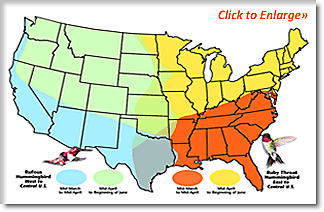
Information technology is believed that the first hummingbirds developed in South America after arriving from Asia 22 million years ago. Once they spread through South America, a few species began to move to Key America, the Caribbean and eventually mainland North America. By migrating to areas with more arable food, these little explorers had less competition for food and territory. Of course, the seasonal cooling likewise drove these species south every fall. This cycle of advancing and retreating with the seasons is the bones foundation of their migratory pattern.
There are currently over 300 recognized hummingbird species, but merely 12-xv will regularly migrate into the United States, and even fewer go along all the style north to Canada.
[back to top]
Hummingbirds that Migrate into the United states of america and Canada:
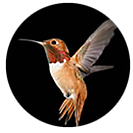
Allen'south
Hummingbird
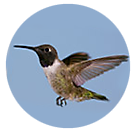
Blackness-chinned
Hummingbird
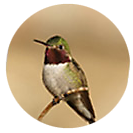
Wide-tailed
Hummingbird
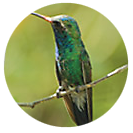
Vitrify-bellied
Hummingbird
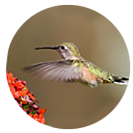
Calliope
Hummingbird
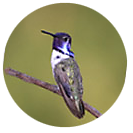
Costa'southward
Hummingbird
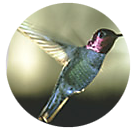
Lucifer
Hummingbird
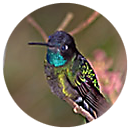
Magnificent
Hummingbird
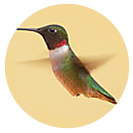
Blood-red-throated
Hummingbird
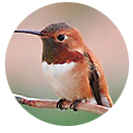
Rufous
Hummingbird
The beautiful Anna'south Hummingbird, a hummingbird mutual to the West Coast, is a special case since information technology doesn't really migrate. While some individual Anna's may adopt a temporary territory with a more than favorable climate, others will stay in the same area yr round. As such, Anna's Hummingbirds are considered resident birds of the U.S. and Canada.
[back to top]
Reddish-throated Hummingbird Migration
The bulk of Ruby-throated Hummingbirds spend their winters between southern Mexico and northern Panama. Considering Ruby-red-throats are solitary birds, individuals will migrate to whatsoever location within this range.
Their winters aren't all sunday and fun though. In fact, they spend most of their fourth dimension preparing for the trip back north.
-
November:Upon completing their fall migration, Ruby-throated Hummingbirds will begin to molt.
-
December: Molting takes its toll, so hummingbirds spend time gorging themselves on the nectar and insects they can find. (Of class, some birds volition stay in the U.S. through the wintertime, weathering chilly temperatures along the Gulf Coast. Other Blood-red-throated Hummingbirds will winter fifty-fifty farther n -- remaining on N Carolina'southward Outer Banks all year long!)
-
January:Maybe the slowest time for Ruby-throats is January, but simply relatively speaking. As their last feathers come in, these birds focus on feeding and do then by visiting dozens of plants each day. Remember, a hummingbird needs a lot of nectar to keep those wings flapping!
-
February: By this fourth dimension, a Scarlet-throated Hummingbird'southward instincts are kick in. Those instincts tell the bird to fatten upwardly and fly north. They know that breeding flavor is coming soon. The earliest departures north from Mexico and Central America brainstorm in late February, while the bulk occurs in March.
[back to top]
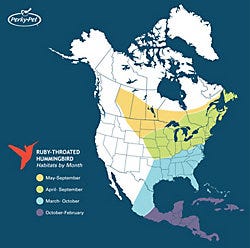
How do Ruby-throated Hummingbirds Drift?
Ruby-throats do not travel in flocks during hummingbird migration. Instead, each bird follows its own instincts on advisable departure times and routes.
Scientists believe that each hummingbird begins its migration in response to environmental triggers. I trigger is the irresolute level and angle of sunlight. Another trigger is believed to be a drop in available natural food. As these signals proceed to actuate, the hummingbird makes its preparations and eventually departs.
On their northward trip, virtually have reached United mexican states'south Yucatan Peninsula by February. In this lush jungle, they begin to feast on insects as they prepare for one of the toughest migrations for any bird. Each year, thousands of Ruby-throated Hummingbirds wing over the open water of the Gulf of Mexico rather than follow the longer shoreline route. These dauntless little birds will fly non-cease up to 500 miles to achieve U.S. shores. It takes approximately 18-22 hours to complete this amazing lone flight.
Some hummingbirds aren't strong enough, though, equally many oil riggers and fishing gunkhole crews can attest. Every year, exhausted Ruby-throated Hummingbirds accept temporary refuge on offshore oil rigs and boats floating in the eye of the Gulf of Mexico. These birds remainder a while earlier bravely launching back into their flying across the open water.
When they return south, Ruby-throated Hummingbirds will follow the same daring migration road in opposite. They'll charge up their energy reserves in the southern U.S. and then zip beyond the gulf toward their wintertime home. That's two big, non-stop trips each year for Ruby-throats – you take to admire their tenacity!
[back to top]
Dietary Needs of the Migrating Ruby-red-throated Hummingbird
In preparation for their migration, Ruby-throated Hummingbirds double their weight from 3 grams to over 6 grams prior to departing.
They don't stay pudgy for long, though. In northward migrations, it'southward not uncommon for a hummingbird to weigh effectually 2.5 grams when information technology reaches U.S. shores!
Their need to fuel upward and add the extra weight to their tiny frames is vital. With a centre rate of approximately 1,200 beats per minute while flight and wings that flutter at least 53 times a 2d, they need some serious energy just to become through the mean solar day, much less a not-stop trip of hundreds of miles.
In general, hummingbirds consume up to fifty% of their body weight in nectar each solar day. During their twice-a-year migration, they increase their nectar intake considerably since they have no idea where their next meal will come from.
HUMMINGBIRD NECTAR
Rufous Hummingbird Migration
The other superstar in the game of hummingbird migration is the Rufous Hummingbird. In the winter, Rufous Hummingbirds reside in southern Mexico. When the urge to drift hits them, they speed upward the Westward Coast of North America until they reach their breeding grounds in Canada and Alaska. That'due south a journey of nearly 4,000 miles -- a huge undertaking for such a tiny bird!
The trip south usually begins in July, and about Rufous Hummingbirds will follow a slightly unlike route. Instead of gliding along the coast, they usually follow the Rocky Mountains back to United mexican states.
[dorsum to superlative]
Backyard Birders & Hummingbird Migration
For fans of hummingbirds, it can be hard to determine the best times to remove feeders in the fall and when to put them back into service in the spring.
-
Should you take downward feeders in the fall? Yes, you lot tin can definitely have them downwardly but only later they finish being used. Keeping them upwards isn't going to play a joke on your hummingbirds into staying longer. Their biological drive is pushing them south, and a full feeder isn't going to modify that impulse. Except in the extreme southern U.S., you tin look to take your feeders downwardly around Halloween. Those folks in the extreme due south may actually see visitors through the entire winter, so go on these feeders filled!
-
When should you put them back up in spring? This is a scrap hard to say matter-of-factly. Hummingbirds migrate n according to their own schedule, weather and food availability. Instead of relying on a hard-and-fast date, your all-time bet is to watch our Migration Map. When the hummers first making appearances s of your location, put out your get-go feeder and add more as you meet more than visitors.
-
Don't forget Anna's! If you're a Due west Coaster who hosts Anna's Hummingbirds, don't accept your feeders down at all. These birds stay in North America all yr long.
BRING HUMMINGBIRDS TO YOUR M
[back to top]
Reporting Your Hummingbird Sightings
To help add together to the Hummingbird Migration Map, endeavour watching your feeders for a few minutes each day in the spring and autumn. Hummingbirds are commonly most active in the mornings or evenings, simply the bulldoze to fatten up for migration may increase activity through the entire day.
As you observe your hummingbirds, accept annotation of their advent, which tin be an indicator of where hummingbirds, equally a species, are in the migration process.
-
Males– With their bright colors, males are the easiest hummingbirds to sort out from a group of other hummingbirds. They also tend to depart on their migration early. That means a swarm of male hummingbirds at your feeders is a skillful indication of the showtime wave of migration.
-
Females and Juveniles– The second wave of hummingbird migration occurs when the adult females and juvenile hummingbirds start their journey. Though they travel around the same fourth dimension, they don't necessarily travel together. The youngsters follow their newfound instincts to motility south. When y'all encounter this group at your feeders, it will be difficult to tell the Moms from the kids. Generally, they all await alike! Hummingbirds nesting in the southern U.South. volition sometimes rear a second brood of chicks before migrating south. This 2nd brood can delay individual migration a bit longer.
-
Feeder bank check – Aside from watching the birds themselves, also keep an eye out on your feeders. Equally the leap migration moves north, you'll find a quicker depletion of nectar from your feeders. This may eventually trail off as hummingbirds focus on natural food and convenance. Equally the fall migration moves south, you'll accept a outburst of activity then your feeders volition sit unused for days. Noting all this activeness is an important sign of migration!
-
Denizen Scientific discipline– Now that you're enlightened of what's going on with your feathered friends, y'all need to submit your sightings to the Migration Map. Exercise so by clicking the carmine "Submit Your Sighting" push button and entering your information. If yous have a photograph, y'all tin include that, also.
Naturally, nosotros exercise not know all the specifics of hummingbird migration, but the more we understand, the better nosotros can capeesh these fascinating creatures. It'due south their natural migration instincts that bring these tiny travelers to our backyards!
[back to top]
Perkypet.com is the top destination to find quality Wild Bird Feeders and Accessories. Perky-Pet® is a trusted brand to bird lovers everywhere. Interact with nature, relax and build memories that last a lifetime by conveniently ordering from perkypet.com. Happy Bird Feeding!
Source: https://www.perkypet.com/advice/bird-watching/hummingbird-migration/migration-facts
0 Response to "How Do You Name a Northwest Coast Art Hummingbird"
Enregistrer un commentaire